
GO ZERO TO ONE BY ACTING LIKE THE CPO
Last month I just completed a 0 to 1 product release which consumed the last 15 months of my time and effort. It was an exciting opportunity for my company to build a unique, net new product line to provide a software-based infrastructure product to let customers deploy and power generative AI-based applications.
As a product management leader of 18 years who has been building and guiding PM teams for the last decade, it had been a while since I was personally tapped to define and lead the creation of a brand-new product vs. growing a product. Building features and product lines are one thing, building up a 0-1 product is something completely different. This was effectively a start-up inside an established company. This required rolling up my sleeves and getting my hands dirty.
Every few years PM authors like to refer back to the notion of the PM being the CEO of the product. I do like this idea, but it is flawed. You need to be the CPO (Chief Product Officer) of your product instead. CEOs drive companies. As a product leader you need to do everything in your power to get your product out successfully across all contributing and involved teams at the company. Almost all of these teams don’t report to you and it doesn’t matter. As the PM/CPO you are the conductor. You must masterfully conduct the orchestra all the way to the final note.
In my case, this opportunity knocked a year and a half ago. Only six months prior, ChatGPT from OpenAI was released and it swept across all industries as people and companies realized this would transform all software product lines, increasing competition. In some cases companies will lose too. E.g. Chegg, a company which rents university books and creates study guides, has been annihilated by ChatGPT. Their stock is down 99%. We stepped up to respond to the ChatGPT moment for private infrastructure and data.
I initially resisted a little. I was already running a strategically important and busy product line. At the same time, I was also wrapping up the merging of two additional overlapping product lines, and in the middle of pitching the acquisition of a company to my employer which we bought in December 2023. I was maxed out but also quickly realized this was a great opportunity.
BE THE CPO
This post will focus on being the CPO of your product. I’ll cover how you go from zero to one and bring the entire company along with you. First and foremost you need to start here and answer these questions for yourself: Are you hungry and willing to run an uphill marathon to make this happen? If the answer is no, please don’t put yourself through this. If you believe the vision and the opportunity, and you have the skills and mettle, you might be the CPO of your new product idea.
Remember, the CPO is the conductor of the company-wide, cross-functional product orchestra for the entire company. You need to intimately understand how to build product (via direct hands-on experience), how to work the body of the entire organization across all teams (influence), and how to share the vision and compel your company to deliver the right product (vision, leadership), to the right customers (correctness), and ship at the right time to meet the market opportunity (timeliness). Furthermore, the resulting product must matter to the company (revenue, customer growth).
THE OPPORTUNITY
There must be a reason that you will work hard and drive your company to take this journey with you. Are the vision and opportunity sufficiently large? Can you win? Can you drive large and meaningful revenue to your company? Deciding you’re excited is not enough here. It must matter to your customers and your company. Are you panning for gold (a risky and hopeful aspiration with a tiny probability of success) or are you selling shovels (providing tools that every person panning for gold needs and buys)? In our case the world did not need another LLM model, another model hub, or another cloud-based AI solution. Our customers need data privacy and safe generative AI on-premises where their data resided. We built high-value universal and safe shovels for enterprise.
GETTING STARTED
Creating a new product line inside an existing company is an act of intrapreneurship. I.e. You must approach this like you’re starting a VC-funded new company. You’re an entrepreneur, but you’re inside a company. You have many of the same concerns as a founder in many ways with some notable exceptions concerning personal family financial risk.
As an intrepreneur, your CEO is your VC. They are taking a bet on you and your product and providing you with series A funding. You still have time to market pressure, funding pressure, execution pressure, etc.
The very first thing you need after you’ve sold your idea is a handful of stellar engineers. If you have a great idea and mediocre engineers, pack up and go back to your day job. You must have a focused, excellent, and motivated team of builders to get this done. Among that team, you need a technical cofounder. This is your CTO who will drive your technical team with vision and leadership. As the product manager, you need to be the chief product officer.
If you have a great idea and mediocre engineers, pack up and go back to your day job. You must have a focused, excellent, and motivated team of builders to get this done.
Generative AI was new to me so I spent a deep dive week reading everything I could and watching YouTube videos to do an initial load of the topic area. I took about 30 pages of notes in a Google doc for myself. I spent time with my technical co-founder to learn as well. Here I formed a view of the GenAI space and opportunity. This was rapid, however, it was also supported by 20+ years of enterprise infrastructure experience.
From here we raced to create a prototype. Given my company already has a full datacenter operating system product, we were able to propose an ugly solution that customers could use and try with the help of services. As some have said for years, you should be embarrassed by the first version. Ship it anyway. Time is not on your side in a fast-moving, competitive industry.
This first version gave us the opportunity to put our point of view out in the market as quickly as possible and test the response. From there I had hundreds of inbound requests for more information. Absolutely nothing could have been better for market validation, customer pain validation, and fine-tuning the concept.
PROTOTYPE, FEEDBACK, BUILD
Now we knew something about the market which not many others knew. I moved on to develop the actual product requirements. We had our company and personal career experience, our learned expertise from the feedback of hundreds of customers, partners, and analysts.
The requirements phase also helped get buy-in from our small engineering team. This is critical because we were about to proceed at breakneck pace to build.
COMPETITION
You must know who you’re up against so you can understand how you will be compared. Educated buyers always want to know how you’re unique, so they can decide if it’s enough to base a purchase decision on. As the CPO this is your job. Spend time early and document this completely. Everyone will ask for this including your investors.
Our learned understanding and customer feedback gave us a key insight. Data is precious and requires protection, and without the confidence that you can protect data, customer GenAI initiatives will stop cold. Companies wanted the value of GenAI located where their data securely resided. They did not want to expose their data to a cloud inference service. I.e. They wanted us to bring GenAI in-house to them, not vice versa as many cloud providers offered.
The competition wanted you to open your on-premises doors to the cloud where they were. Enterprise customers don’t want this. The risk of data loss and exposure is far too high.
GETTING FUNDED
As an intrapreneur, you have an idea, but you also have a day job. To get funding, you have to pitch an idea to your leaders to get investment. The funding you want won’t come in the form of actual dollars, and you won’t get a term sheet.
If you can sell your leadership on the idea that they should invest in you, they will invest by giving you time and people. To the company, this still equals dollars. You’re still an employee so they are giving you a green light to use the time of people including yourself to get something built. You still have a time to market rush and you still need to acquire customers and revenue.
As an intrapreneur you won’t get stock options other than what you already have as an employee. You will get oversight and you will have to report up to the leaders that funded you. They are your VCs and board. You will report to them frequently and this will take more time than you want it to. Keeping them happy means keeping your new enterprise healthy and funded.
Doing a great job means you will create something new. Doing a poor job may tarnish your reputation and limit your future opportunities at this company. Doing a terrible job may lose you your day job.
Your upside as an intrapreneur is opportunity and visible results. It’s not often that any PM gets to work on a net new product in any form which matters to the company. Anyone can work on something new and meaningless. These do not move the needle for company or your career. New and meaningful is rare. It’s a risk worth taking. Making a success on this type of effort pays off in new, larger opportunities. It may also pay off with opportunities for career growth which could also come with higher levels of compensation.
BUILDING A KILLER TEAM
The team you need will be built in stages based on the development progress of your product. As mentioned, you need a handful of great engineers, a technical leader (acting CTO), and a great product leader (acting CPO). This is your starting set.
A weak or insufficient team won’t overcome the challenges of getting something built on a timeline and MVP scope that will matter to customers. Worse, a weak team might build something that is incomplete, poorly built, unsustainable, or riddled with bugs to the point of uselessness. Getting this initial team built is your first challenge. If you can’t do this, do not pass Go, do not collect $200.
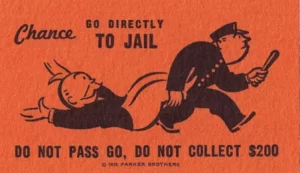
If you do have that great initial technical team, you will invest in them first. From you they need requirements and a direct line to the voice of the customer. Though you are in the loading phase of product development, this is actually somewhat easier because of the intense focus you will have. There are many other groups to come which will require your time in the following phases. You don’t need all your team members at once.
Post-funding, you may feel you have succeeded in convincing the company with your vision. As the CPO, however, you will repeatedly sell the opportunity to interested current and future stakeholders for the entire build phase and beyond. You will endlessly answer questions. After all, you’re the product person who knows the “why” and you defined the goals. Few will pay as much attention as you do. Be aware of this and continually keep everyone in line with the vision so they support you when you need them.
STAGE THE TEAMS YOU NEED
How long it takes to go from idea to validation, to requirements, to dev kickoff, to delivery are dependent on the product and scope. Therefore I won’t attempt to create a timeline.
You will start with eng and PM as I mentioned. Your cross-functional team will also include marketing, sales, services, business development, pricing, and legal. This is only a high-level view. Even more point stakeholders will be involved at specific times. Keep all stakeholders involved and engage them when needed to get to GA.
Marketing, documentation, analysts, PR, and patents will come towards the end of the process. Sales and SE will be critical inputs to pricing and packaging as they validate how they can actually sell your product. If you need partnerships, business development will engage in the middle to understand and build the right alliance partners. There are many small variations on these including exceptions. This is where you must understand the entire body of your organization to succeed.
THINGS LEARNED
-
In conceiving a full 0-1 product you will forget something at the outset. Lean on your team but also expect this. You will have some room to adjust. In other cases, assess critically if what you forgot can wait for version 1.1. Many times it can wait. Some opportunities or forgotten items must be included. This may mean something else you intended to do goes to version 1.1. In either case, be ready to ship on time. Your market can’t wait.
-
Industry timing to influential trade shows can be critical to the impact of your product in market. These can also be forcing functions for driving timely delivery for your cross-functional teams. Know which events are the most important at the start.
-
Get personally involved with selling before GA. That’s when you find out if your product has wings and what’s going to get traction or not. Customers don’t spend money on things they don’t believe will meaningfully help them. They can be direct and harsh when they don’t believe you’re worth it. You need to hear this first hand so you can make your product better and worth customer purchase.
-
Leverage every opportunity to speak internally and externally. Remember as the CPO you are constantly selling the merit of your idea and investment to your customers and your sellers. Shipping is not enough. They will not just come if you build it. You must sell the message repeatedly. If the message and product are right, selling will be far easier.
-
Money does not grow on trees. As an intrapreneurship product at a successful company you may believe there is plenty of money to go around if you need more. It does not work this way. Team have budgets and budgets get set once a year. If you need more money, you have to get someone’s budget dollars assigned to you. Trust me, no one has budget that is unaccounted for, even if it’s not spent yet. You must know and plan for budget cycles. Adjustments can always be made, but mid-year, this money always comes from someone who will fight against you to keep their dollars.
-
Keep your executive team informed proactively. They have the ability to unfund you as quickly as they funded you. Keep them informed and on your side. They know nothing goes perfectly all the time. They will also keep you accountable for being on-time and on-budget.
-
Stay on target, even though the world will ask you for another 100 things that you did not plan for. This is PM 101. Always start with first principles.
-
Keep your investors (your CEO and their staff) close and appropriately informed. These are your VCs. Regular updates and assessments will help align them to your goals. Remember it’s their money (the company) which is on the line, not yours. Iterative product success and C-level hygiene can also help you get your B round to keep going.
THE CPO IS NOT THE CEO
CEOs have several major responsibilities, and numerous additional ones too. They set company direction, implement strategy, represent the company to external stakeholders. Their scope of responsibilities is wide and includes many more items.
CPOs also have a lot of responsibilities, but they are not the CEO. They set product vision, represent product to the C-staff, get products developed, run market analysis, manage budgets, and more. They often have teams reporting to them to execute many of these responsibilities.
As a PM intrapraneur, you need to act like you are the CPO of your new product line. A new product is not a feature, and it’s not an evolution of a product that already exists.
If you treat your role like a CPO, you will be applying maximum depth and acumen to your product, giving it the best chance of success. You will drive vision through execution, orchestrate the efforts of others to drive outcomes you need, and align all to the maximum result possible.
While acting like the CEO isn’t a terrible comparison, it’s too grand and doesn’t capture the right scope. You don’t own the company direction, you don’t work with the board, and the success of the entire company is not on your shoulders.
The CPO is the ideal fit to align yourself to as you build your product journey. The CPO is a company executive, they fully own the success of building product, and ensure that the product is financially successful (that sales can sell it), and they orchestrate the entire company to ensure the product vision gets to the world with the right scope and right time.
Next, if your product is for sale, it’s time to start thinking like you’re the General Manager.
ABOUT LUKE
Luke Congdon is a career product manager living and working in Silicon Valley since 2000. His areas of focus include enterprise software, virtualization, cloud computing, and AI/ML. He has built and brought numerous products to market including start-up MVPs and billion-dollar product lines. Luke currently lives in San Francisco. To contact, connect via luke@lukecongdon.com or https://www.linkedin.com/in/lukecongdon/.